



The role of renewable energy companies is shifting: from asset owners focused on production, to active traders managing price risk and portfolio performance. Advanced forecasting is often seen as the key to unlocking this commercial potential. Everyone in power markets is investing in better forecasts. But if everyone has a similar forecast, where does the edge come from?
The Limits of Forecasting
As renewable energy penetration grows, electricity prices have become more volatile. Wind and solar output fluctuates with the weather, and supply can shift dramatically within hours. The natural response has been to invest in better forecasting. Machine learning and AI based models now predict wind output, solar generation, and market prices with impressive accuracy. But there is a problem with this assumption, better forecasts do not automatically translate into better outcomes.
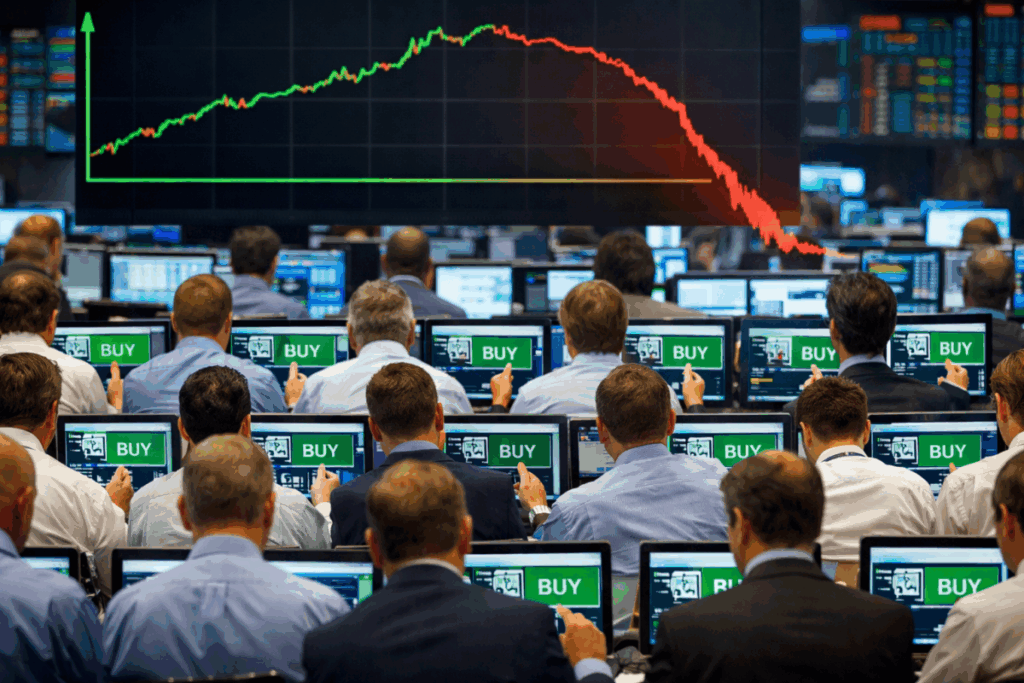
Forecasting capabilities are improving rapidly across the entire industry. Weather data is widely available, and machine learning and AI tools are becoming commoditised. When many market participants react to the same signals, their strategies begin to converge. If forecasts predict strong winds across Northern Europe, many traders anticipate lower prices and sell power ahead of time. When this happens at scale, the collective response itself moves the market and the forecasting edge disappears. Financial markets have long recognised this dynamic: when too many participants follow the same signal, trades become crowded and profit opportunities shrink. Electricity markets are beginning to exhibit the same pattern.
There is a deeper problem that forecasting cannot fix. The times when renewable generators produce the most electricity are often the times when prices are lowest. When wind speeds increase across a region, many wind farms generate simultaneously. The surge in supply pushes prices down. When wind drops, supply tightens and prices rise. This negative relationship between production and price is a defining economic feature of renewable markets.
Consider a simplified wind farm with three possible outcomes:
| Scenario | Production | Price | Revenue |
| Low wind | 60 MWh | €150/MWh | €9,000 |
| Medium wind | 100 MWh | €80/MWh | €8,000 |
| High wind | 140 MWh | €20/MWh | €2,800 |
The wind farm produces the most electricity precisely when the market values it least. More accurate forecasts help reduce uncertainty about which scenario will occur, but they do not remove this underlying asymmetry.
The Real Decision Problem
For renewable energy traders, the core challenge is therefore not simply predicting what will happen tomorrow. The real question is how to position assets and hedging strategies given that outcomes remain uncertain. This means balancing two competing objectives: maximising expected revenue on one hand, and protecting against revenue losses in the worst market conditions on the other. The real concern is not volatility in general, but specifically the scenarios where high renewable output coincides with low prices, the situations that hurt most.
A useful way to think about this trade-off is: Profitability minus the cost of surviving bad market states. This is, at its core, a mathematical optimisation problem. The decision variables are the trading positions (buying and selling electricity) and hedging positions (financial contracts that offset price risk) the company takes. The objective balances expected revenue against a penalty for large losses in the worst market scenarios. This measure, Conditional Value-at-Risk or CvaR, measures the average loss in the worst % of scenarios, i.e., the expected outcome conditional on losses exceeding the Value-at-Risk threshold. This allows the model to explicitly account for tail risk rather than just the probability of extreme losses.
Traders must decide how much electricity sell forward (lock in prices in advance through contracts), how much exposure to leave to spot markets (where electricity is traded for near-immediate delivery at prices that fluctuate in real time), and how to structure the overall portfolio, with an explicit view on how much downside risk (the potential for losses in adverse scenarios) is acceptable. Forecasts remain important, but as inputs to this optimisation, not the answer in themselves.
Portfolio Design as the Real Edge
This reframes where competitive advantage actually comes from. Diversification plays a key role. Wind and solar generation follow different production patterns, and combining them can reduce revenue volatility. Flexible assets like batteries and hydro storage add further value by shifting electricity from low-price periods to high-price periods. Financial hedging through forward markets and options shapes revenue outcomes without requiring perfect foresight. These are portfolio design decisions. They involve structuring assets and positions so that the business remains viable across a wide range of market conditions not just the expected one.
The growing volatility of renewable electricity markets is often framed as mainly a forecasting problem. It is not, or at least, not primarily. Forecasting tools are spreading across the industry. As more companies rely on similar signals, strategies converge and margins compress. The companies that succeed will not necessarily be those that predict the future most accurately. They will be the ones that design better portfolios and make better decisions under uncertainty.
In renewable energy markets, the forecast is becoming a commodity. The edge lies in what you do with it.