



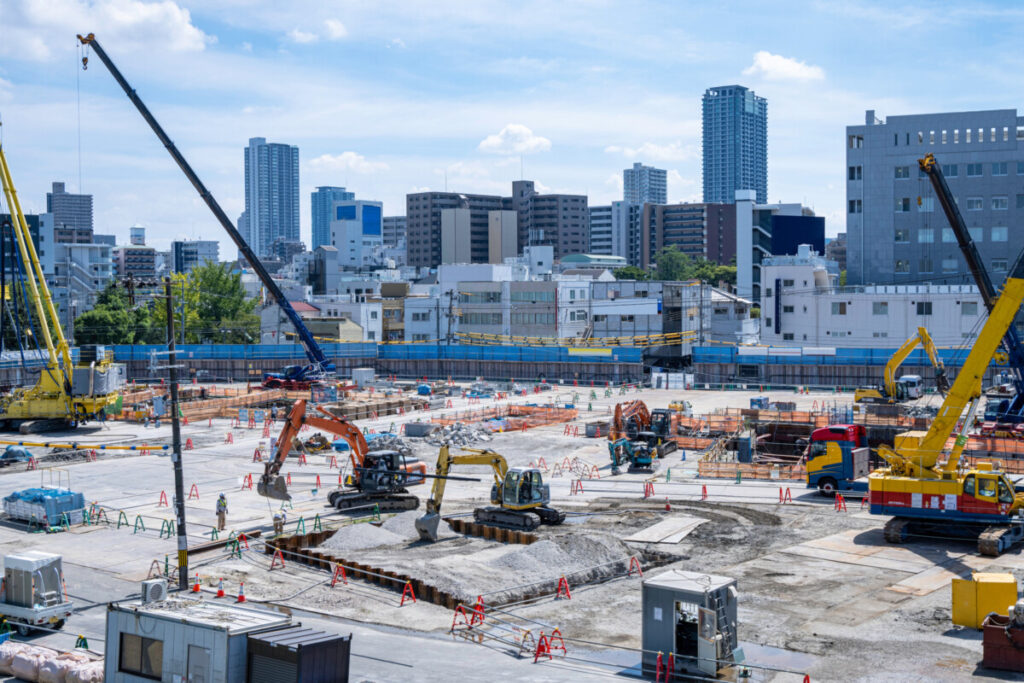
Construction companies rely on heavy machinery such as excavators, cranes and generators, which traditionally run on diesel. To reduce CO₂ and nitrogen emissions, these machines are increasingly being replaced by electric alternatives. However, construction sites are temporary locations that often have a limited grid connection. To keep the electric machines running, additional batteries, solar panels or backup generators are needed. Choosing the right capacity for these assets requires a clear insight into how they will be operated. We developed a decision support model that provides this insight.
From spreadsheets to systematic energy management
We worked on this project together with a major construction company in the Netherlands, as part of an energy management platform for emission-free construction sites. Until now, this type of energy management has often relied on experience and custom Excel files containing asset descriptions, schedules, power sources and planning scenarios. While familiar, this approach is manual, time-consuming and difficult to scale. Our role was to develop the optimisation model at the core of the platform, enabling a more systematic and reliable approach to energy management. The model was tested and validated with real data from construction sites.
Modelling the construction-site energy system
Based on the asset schedules and energy demand of a site, the model decides which energy source is used to power which machine, and when batteries should be charged or discharged. It takes into account grid connections and their capacity limits, swappable batteries, PV generation and combustion generators. Depending on the planning question, the model can be set to minimise the additional grid capacity, battery capacity required, and the number of times machines switch between energy sources, keeping operations practical on site.
Comparing alternatives with confidence
Because the model automatically generates an energy plan for each combination of grid connection, batteries and generators, planners can easily compare alternatives. Can the site run on its available grid connection? Is additional battery capacity needed? What are the consequences of a different demand scenario? By evaluating different scenarios and demand profiles, planners can select solutions that are robust, rather than optimal for a single situation only.
With this optimisation model, construction teams can size their energy assets correctly and move towards emission-free construction.
To learn more about our optimisation models for construction-site energy management, don’t hesitate to contact us at info@doingthemath.nl.